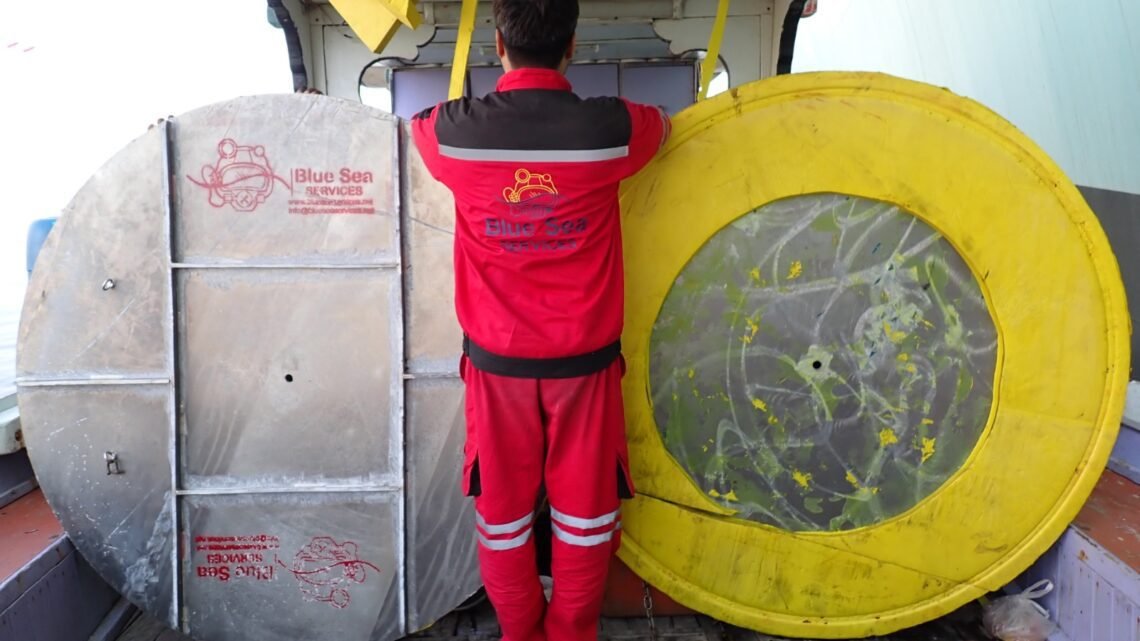
Maintaining Valves Without Dry-Docking
Underwater blanking and de-blanking of overboard valve systems provides a critical solution when an internal sea valve or discharge outlet fails afloat. Traditionally, repairing or replacing a faulty hull valve required an expensive, emergency dry-docking—costing ship owners thousands of dollars in off-hire time and port fees.
Today, advanced underwater valve isolation offers a safe, fast, and cost-effective alternative. By deploying specialized underwater blanks or temporary cofferdams, commercial divers seal hull openings from the outside, allowing internal ship engineers to safely overhaul or replace valves while the vessel remains afloat at berth or anchorage.
1. What is Underwater Blanking and De-Blanking?
The process relies on creating a temporary, watertight seal over hull penetrations (such as sea chests, discharge outlets, or inlet grates) using external blanks or magnetic/vacuum cofferdams.
- Underwater Blanking: A commercial diver installs an engineered blanking plate, plug, or custom cofferdam externally over the target hull penetration. Once secured, internal engineers can safely dismantle the defective valve inside the engine room without water ingress.
- Underwater De-Blanking: Once internal valve repairs or replacements are complete, tested, and approved by the attending surveyor, the diver returns to safely release, remove, and retrieve the external blanking assembly.
2. When is Overboard Valve Blanking Required?
A vessel requires underwater valve isolation under several critical circumstances:
- Emergency Valve Overhaul: Sudden failure of sea suction or overboard discharge valves.
- Scheduled Survey Maintenance: In-water repair of valves prior to class renewals.
- Pipe Repairs: Replacement of corroded sea-chest pipe spools inside the hull.
- Dry-Dock Avoidance: Executing mandatory repairs during scheduled cargo operations to eliminate off-hire downtime.
For comprehensive hull maintenance alongside valve repairs, explore our Underwater Hull Cleaning Services to optimize overall vessel performance during port calls.
3. The Step-by-Step Isolation Process
Step 1: Pre-Diving Assessment & Safety Protocols
Before entry, divers execute strict LOTO (Lockout/Tagout) protocols on internal pumps, sea chests, and intake lines to prevent suction hazards (differential pressure).
Step 2: Surface Preparation
The diver cleans the target area around the hull aperture using specialized hydraulic tools, removing barnacles and marine growth to ensure a flush, watertight seat for the seal.
Step 3: Blank Installation & Hydrostatic Sealing
The diver positions the blanking plate or cofferdam fitted with heavy-duty neoprene or rubber gaskets. Internal engineers open the valve drain to test isolation; hydrostatic pressure from the sea pushes against the exterior blank, locking the seal firmly against the hull.
Step 4: Internal Repair & Final De-Blanking
After the internal valve work is completed, sealed, and inspected alongside an Underwater Inspection and UWILD Survey, hydrostatic pressure is equalized internally. The diver then carefully executes the de-blanking procedure, retrieving all equipment safely.
4. Why Choose Blue Sea Services in Pakistan?
Executing underwater blanking requires absolute technical precision—a failed seal underwater jeopardizes the safety of the vessel and its crew.
Operating across Karachi Port, Port Qasim, and Gwadar, Blue Sea Services provides:
- Class-Approved Standards: Certified operations adhering to DNV, ClassNK, and major IACS guidelines.
- Custom Blanking Solutions: In-house fabrication of specialized wooden plugs, steel/aluminum blanks, and magnetic cofferdams for various hull curvatures.
- 24/7 Emergency Deployment: Rapid-response diving teams ready for immediate anchorage or berth mobilization.
Emergency Valve Repairs Made Easy
Do not let a stuck or leaking overboard valve interrupt your voyage schedule. Contact our commercial diving operations team to arrange rapid-response valve isolation during your next port call.